

Online casino games NZ players can access in 2026 cover three main categories: pokies, table games and live dealer studios. Pokies typically return between 94% and 97% over the long run. Single-zero roulette has a house edge of 2.70%. Live dealer blackjack, roulette and baccarat are streamed around the clock from dedicated studios. This hub covers how each category works and what to compare before you pick where to play.
In short:
- 🎰 Most pokies sit between 94% and 97% RTP, and the exact figure is printed in each game’s info screen.
- 🎡 European roulette has a 2.70% house edge, while the double-zero American wheel has 5.26%.
- 🃏 Blackjack played with basic strategy brings the house edge down to roughly 0.5% on standard rules.
- 🎥 Live dealer tables stream in real time, with real cards and wheels and HD video.
- ⚖️ The Online Casino Gambling Act 2026 took effect on 1 May 2026, and its Regulations followed on 3 July 2026.
- 🔞 The legal gambling age in New Zealand is 18+.
Online casino games NZ: the three main categories
Every online casino lobby is built on the same three blocks. Each has its own maths, pace and decision-making. The table below sets them side by side, so you can see quickly which category fits the way you like to play.
| Category | How results are decided | Typical return to player | Player decisions | Pace |
|---|---|---|---|---|
| Pokies | Certified random number generator (RNG) | Around 94%–97% | Stake size and features only | Fast, a few seconds per spin |
| RNG table games | RNG simulating cards, dice or a wheel | Around 97%–99.5%, depending on game and rules | Meaningful in blackjack and video poker | Fast, set by the player |
| Live dealer games | Physical cards, wheels and shoes on camera | Matches the RNG version of the same rules | Same as the table game, plus side bets | Slower, set by the dealer |
Why RTP and house edge come first
Return to player (RTP) is the share of all stakes a game pays back over a very large number of rounds. House edge is the reverse figure. A 96% pokie has a 4% edge, and a 2.70% roulette wheel has a 97.30% RTP. Neither number predicts a single session. Short-term results swing widely in both directions. What RTP does tell you is the long-run price of the entertainment.
- Higher RTP: less of your total stake is retained over time.
- Same game, different RTP: many studios release one title in several RTP versions, and the casino chooses which one to run.
- Where to check: the “i” or help screen inside the game, not the lobby thumbnail.
Pro tip: Open the help screen of a pokie you already know at two different casinos. If one shows 96% and the other shows a lower figure, both casinos are running the same game but with a different payout setting. Over hundreds of spins, that gap matters more than any single bonus feature.
NZ pokies online: RTP, volatility and features
Pokies make up the biggest share of every casino lobby. They are also where game design has changed the most. Modern titles go well beyond three reels and a pay line. Cascading wins, expanding grids, multipliers and layered bonus rounds are now standard. Understanding the mechanics helps you choose games that match your budget and patience.

| Pokie type | How it plays | Volatility profile | Best suited to |
|---|---|---|---|
| Classic 3-reel | Few lines, simple symbols, small feature set | Usually low to medium | Long, steady sessions |
| Video pokies (5-reel) | Fixed lines or “ways to win”, free spins rounds | Varies widely by title | Most players and most budgets |
| Megaways-style | Reel heights change every spin, up to tens of thousands of ways | Usually high | Players comfortable with long dry spells |
| Cluster pays | Wins form from groups of touching symbols, often with cascades | Medium to high | Players who like chain reactions |
| Progressive jackpots | A share of each stake feeds a growing prize pool | Very high | Players who accept a lower base-game RTP |
Volatility: the number nobody prints in the lobby
Two pokies can share the same RTP and still feel completely different. Volatility explains the difference.
- Low-volatility games pay small amounts often.
- High-volatility games go quiet for long stretches and then concentrate their return into rare, larger hits.
Studios often rate volatility on a scale in the game info, sometimes shown as lightning bolts or a 1–5 score. Before you play a new title, check the following:
- The volatility rating, if the studio publishes one.
- The maximum win, expressed as a multiple of your stake.
- How often free spins trigger, if the paytable states it.
- Whether the bonus round can retrigger.
Bonus buy and feature drops
Many recent pokies let you pay a fixed multiple of your stake to enter the bonus round straight away. The cost is commonly 50x to 100x your bet. The RTP of the bought feature is often listed separately from the base game, and it can be slightly higher or lower. The option is a design choice, not a shortcut. It compresses variance into fewer, larger outcomes.
- What it changes: how quickly results arrive, not the long-run return.
- What to read: the separate bonus-buy RTP line in the help screen.
- What to remember: a single buy at 100x a NZ$1 stake costs NZ$100 in one decision.
Progressive jackpot pokies
Networked jackpots pool a small slice of every qualifying stake across many casinos, which is how prize pools grow so large. The trade-off is that the base game usually runs at a lower RTP, because part of every bet funds the jackpot. Some games also only award the top prize on maximum stake, so check the paytable before you play.
| Jackpot format | How the prize is funded | What to check |
|---|---|---|
| Stand-alone progressive | One game at one casino | The trigger condition in the paytable |
| Networked progressive | The same game across many casinos | The base-game RTP once the jackpot share is excluded |
| Fixed-tier jackpots (Mini, Major, Grand) | Preset values, sometimes with one progressive top tier | Whether the tiers scale with your stake |
The studio catalogue is the real differentiator
Internationally licensed casinos usually integrate content from dozens of studios through aggregation platforms. That breadth shows up in several ways:
- A wider range of mechanics, from classic fruit games to cluster-pays and Megaways titles.
- More choice of volatility, including niche high-variance releases.
- Earlier access to new releases, which often launch on international platforms first.
- Exclusive branded titles that some operators commission directly from studios.
A deep catalogue also makes the RTP check more useful. When the same game is available in several versions, you can choose an operator that runs the higher setting.
Full guide: online pokies NZ explains RTP, volatility, hit frequency and pokie features in depth.
Online table games NZ: blackjack, roulette and baccarat
Table games give you the clearest view of the maths. The rules are fixed and published, so the house edge can be calculated exactly. The table below uses standard rule sets. Variants with player-friendly or player-unfriendly tweaks will shift these numbers.

| Game / bet | House edge (standard rules) | Skill element |
|---|---|---|
| Blackjack with basic strategy | About 0.5% | High: every hand has a correct play |
| European roulette (single zero) | 2.70% | None |
| French roulette, even-money bets with La Partage | 1.35% | None |
| American roulette (double zero) | 5.26% | None |
| Baccarat: Banker bet (5% commission) | 1.06% | None |
| Baccarat: Player bet | 1.24% | None |
| Baccarat: Tie bet (8:1) | 14.36% | None |
Blackjack: the rules that move the edge
Blackjack is the only common casino game where your decisions measurably change the outcome. Basic strategy is a fixed chart of the mathematically best play for every hand against every dealer upcard. It is what brings the edge down to around half a percent. The table rules matter just as much:
- Blackjack pays 3:2: standard. Tables paying 6:5 add well over a full percentage point to the edge.
- Dealer stands on soft 17: slightly better for the player than hitting soft 17.
- Double after split allowed: favourable.
- Fewer decks: generally favourable, all else being equal.
- Late surrender: favourable when it is used correctly.
Pro tip: Before you sit at any blackjack table, live or RNG, open the rules panel and look for “Blackjack pays 3:2”. That single line is the quickest filter there is. A 6:5 payout costs more than almost every other rule variation combined.
Roulette: pick the wheel, not the system
No betting system changes roulette’s house edge. Martingale, Fibonacci and d’Alembert all reshuffle the size and timing of bets, but each spin is independent. What you can control is the wheel itself. A single-zero European wheel costs half as much as an American wheel. On French tables with La Partage or En Prison, the even-money bets drop to 1.35%.
- European roulette: 37 pockets, one zero.
- French roulette: European wheel, plus half-back rules on even-money bets.
- American roulette: 38 pockets, zero and double zero.
- Multiplier roulette (e.g. lightning-style): random multipliers on straight-up numbers, funded by a reduced standard payout.
Baccarat: two bets worth knowing
Baccarat is a pure chance game, but it has some of the lowest edges in the casino, provided you stay on the main bets.
- Banker bet: 1.06% edge after the usual 5% commission.
- Player bet: 1.24% edge.
- Tie bet: 14.36% edge at 8:1 in eight-deck games, despite its tempting payout.
- Side bets (pairs, dragon bonus and similar): generally carry much higher edges than the main bets.
Video poker, craps and casino poker variants
Beyond the big three, most lobbies carry a second tier of table games. Their returns vary, but the principle is the same: the paytable and the rules decide the edge.
| Game | What decides the return | What to check |
|---|---|---|
| Video poker | The paytable and correct hold strategy | Full-pay versions of Jacks or Better list 9/6 for Full House/Flush |
| Craps | Choice of bet | Pass/Don’t Pass and odds bets carry low edges; proposition bets carry high ones |
| Casino Hold’em | Fold/call decisions against the dealer | The side-bet paytable, which usually adds edge |
| Three Card Poker | Play/fold decisions | The Pair Plus paytable, which varies between versions |
Full guides: online blackjack NZ (rules, house edge and basic strategy) and online roulette NZ (wheels, bets and real odds).
Live dealer casino NZ: studios, tables and game shows
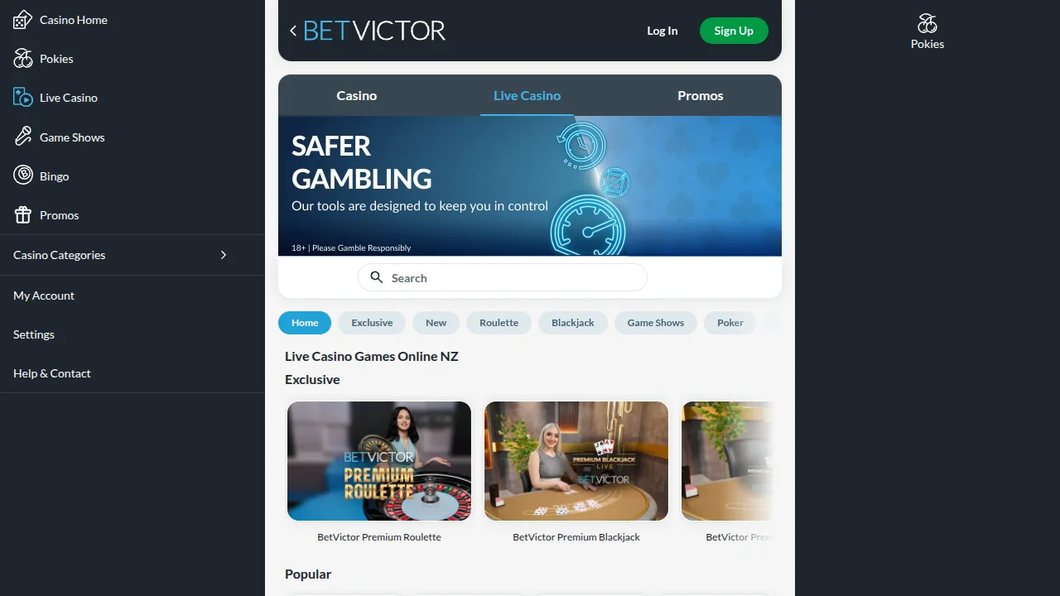
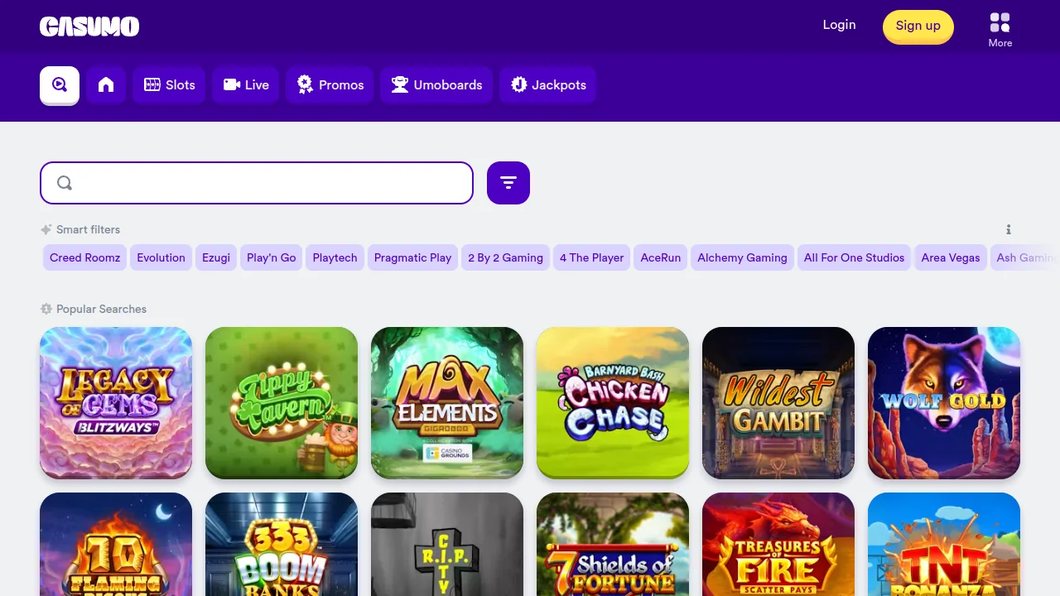
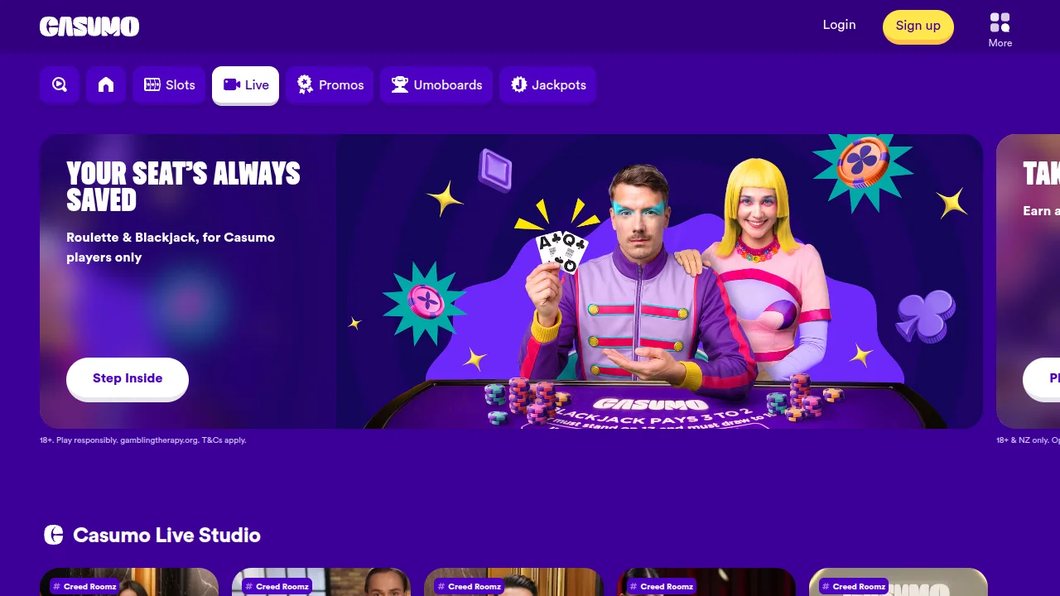
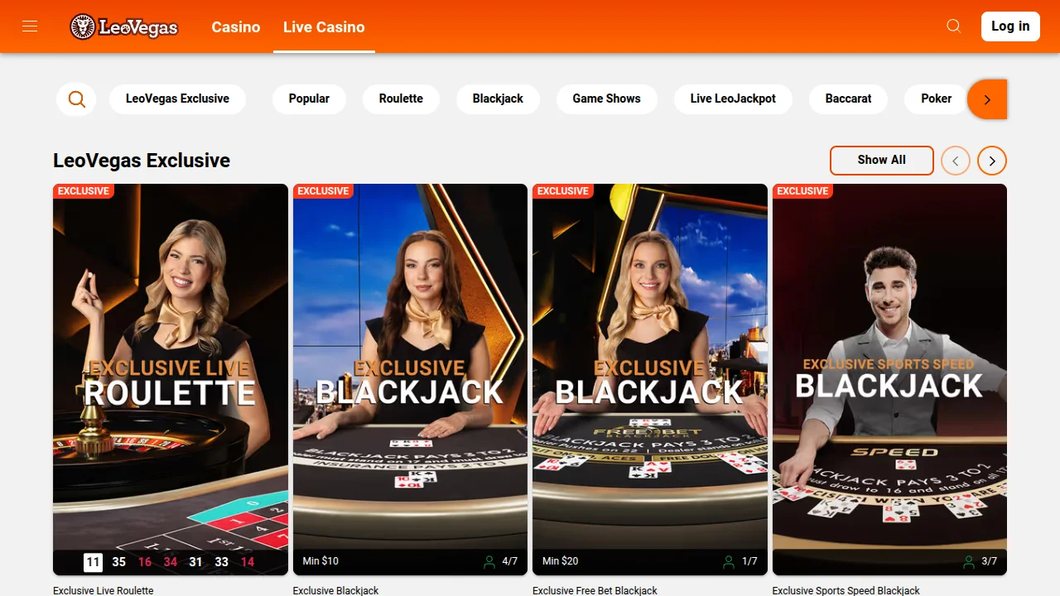
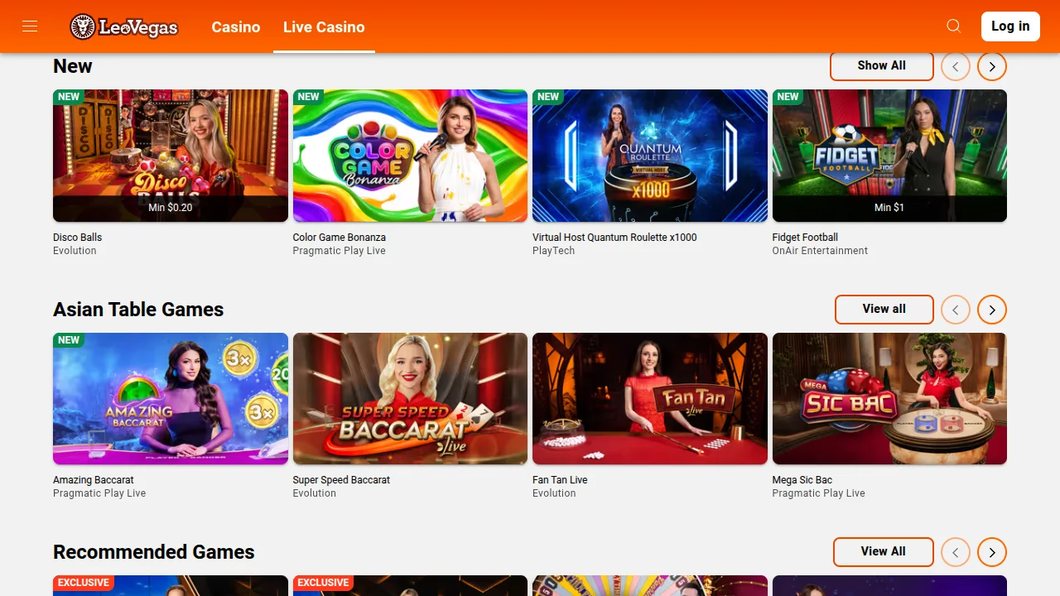
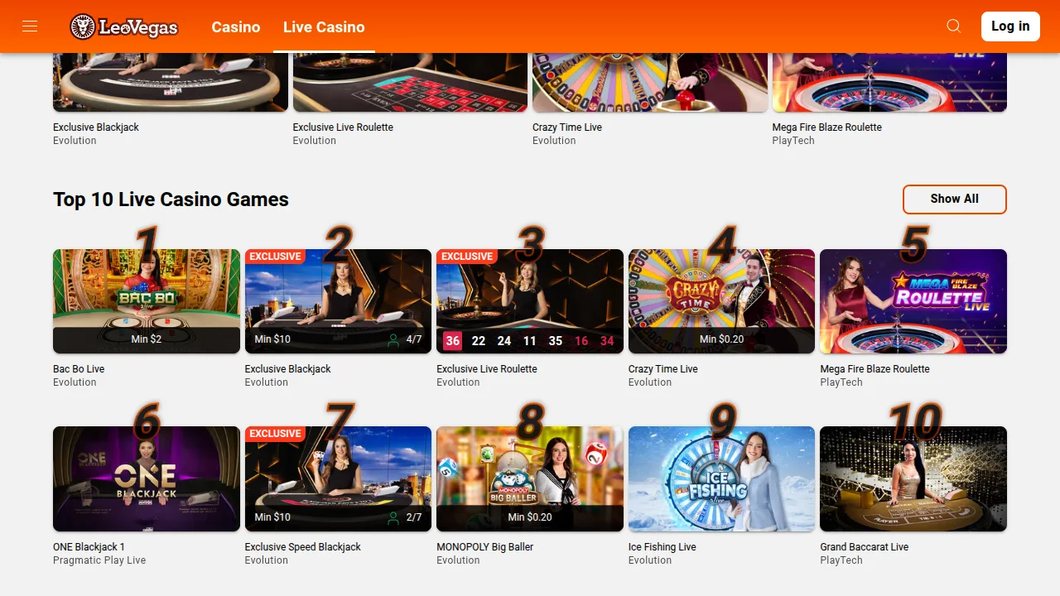
Live casino puts a real dealer, real cards and a real wheel in front of a camera. You place bets through an on-screen interface. The appeal is transparency and atmosphere: you see every card leave the shoe. Because games run on a fixed timetable set by the dealer, a live session is also slower than RNG play, which many players see as an advantage.
| Live format | What makes it different | Typical rounds per hour |
|---|---|---|
| Live blackjack (seated) | A fixed number of seats, with players acting in turn | Lower, set by the table |
| Infinite / unlimited blackjack | Unlimited players share one dealer hand and choose their own decisions | Moderate |
| Live roulette | A real wheel, with European, French, American and multiplier versions | Moderate |
| Speed baccarat / roulette | Shortened betting windows | High |
| Game shows | Money wheels and bonus rounds with presenters | Moderate |
Why live casino breadth differs between operators
A live lobby depends on which studios the operator has contracted and which table types it licenses. International operators usually carry several live suppliers at once. That adds up to a wider spread of options:
- Dedicated and branded tables reserved for one operator’s players.
- Low-stake tables for casual play, alongside VIP tables with higher maximum bets.
- Language-specific tables and round-the-clock availability across time zones.
- Multiple versions of the same game, such as standard, speed and multiplier.
Game shows: entertainment first, maths second
Money-wheel and bonus-round game shows are built for spectacle. Presenters, studio sets and multiplier reveals make them engaging. Their RTPs are published per bet and often differ from segment to segment of the same wheel. Some segments return noticeably less than others.
- Read the help panel for the RTP of each betting spot.
- Bonus segments usually carry the variance; number segments carry the frequency.
- Treat game shows as a different product from blackjack or baccarat, not as a substitute.
Pro tip: Live game shows publish an RTP for each betting spot, not one figure for the whole game. Before your first round, open the help panel and compare the spots. The difference between the best and worst bet on the same wheel can be larger than the difference between two completely different pokies.
Stake ranges at live tables
Live tables show their minimum and maximum bets in the lobby before you join. Many lobbies run parallel versions of the same game at different limits. Choosing the right table is simple once you know where to look:
- Lobby badge: min–max stake shown on the table tile.
- In-game panel: a separate limit for side bets and each bet type.
- Bet behind (blackjack): lets you follow a seated player’s hand when seats are full.
Full guide: live casino NZ covers studios, streams, table limits and game shows.
International casino licences for NZ players compared
Internationally licensed casinos serve a large share of New Zealand’s online casino players. That is because, until the new framework, there was no domestic licence for online casino play beyond the TAB and Lotto NZ. The licences these operators hold are not all alike. They differ in supervision, dispute handling and technical requirements. The table compares them by what the regulator actually does.
| Licence | Regulator | Supervision model | Player complaints route | Game testing |
|---|---|---|---|---|
| Malta (MGA) | Malta Gaming Authority | EU-based, ongoing compliance audits, AML and responsible gambling obligations | Formal complaints process run by the regulator | Certified RNG and game approval required |
| Curaçao (new framework) | Curaçao Gaming Authority | Licences issued directly by the authority under the reformed regime, replacing the old master-licence/sub-licence model | Complaints channel through the authority | RNG certification expected |
| Kahnawake | Kahnawake Gaming Commission (Canada) | Long-running regulator with its own regulations and inspections | Formal complaint procedure with the commission | Approved testing required |
| Isle of Man / Gibraltar | Gambling Supervision Commission / Gambling Commissioner | Strict, well-resourced supervision | Regulator-backed dispute routes | Rigorous testing standards |
MGA versus Curaçao: what actually differs
The MGA works as a full-scope European regulator. It audits operators, sets technical standards and requires operators to implement responsible gambling tools. Curaçao has reformed its system. Licences are now issued directly by the national authority with clearer obligations, replacing the older sub-licence chains. A licence granted under the new Curaçao regime is a different product from one granted under the legacy system.
- MGA: longer-established audit cycle and detailed technical rules.
- Curaçao, new regime: direct licensing, with standards that have tightened since the reform.
- Both: allow broad studio catalogues, crypto in many cases, and international payment rails.
Licence numbers and transparency
Some operators publish their licence number and licensed entity in the site footer, often with a clickable validation seal that leads to the regulator’s register. That is a clear transparency signal and worth a quick check. Many others state only the jurisdiction and the licensed company name. In both cases, what matters day to day is how the operator handles payouts, verification and disputes.
- Click the footer seal, if present, and confirm it opens the regulator’s own domain.
- Match the company name in the footer to the one in the terms and conditions.
- Note the complaints route the terms describe.
Casino payments in NZ: cards, e-wallets and crypto
Payment choice affects how quickly money arrives, whether a bonus applies, and which verification steps come first. New Zealand players typically use the following methods at international casinos. Processing times depend on the operator and on whether your account is already verified.

| Method | Deposits | Withdrawals | Points to check |
|---|---|---|---|
| Debit/credit card | Instant at most sites | Supported at many; some route payouts to a bank transfer | Some banks decline gambling transactions |
| Bank transfer | Can take longer to credit | Widely supported | Banking days affect timing |
| Apple Pay / Google Pay | Instant and mobile-friendly | Often deposit-only | Check which withdrawal method applies |
| Skrill / Neteller | Instant | Usually among the faster options | Some bonuses exclude e-wallet deposits |
| Crypto | Fast once on-chain confirmations clear | Often the quickest payout route | Network fees and price movement between deposit and withdrawal |
Verification before the first withdrawal
International operators carry out identity and address checks, typically before the first payout. Completing these early avoids delays later. Standard requests include:
- Photo ID, such as a passport or driver licence.
- Proof of address dated within recent months.
- Proof of payment-method ownership, for example a masked card photo or an e-wallet screenshot.
- For larger amounts, sometimes a source-of-funds document.
Limits at international casinos
Deposit, withdrawal and stake limits at international casinos are set by each operator and each game, and they vary widely. Table maximums in live lobbies and per-spin maximums on pokies are shown inside each game. Withdrawal caps per day, week or month are listed in the payment terms. Account-level deposit limits that you set yourself are a separate tool, covered below.
NZ online casino law 2026: Gambling Act and the new regime
New Zealand’s framework changed significantly this year. The Gambling Act 2003 still governs land-based gambling. The Online Casino Gambling Act 2026 took effect on 1 May 2026, and the Online Casino Gambling Regulations 2026 followed on 3 July 2026. The Department of Internal Affairs (DIA) / Te Tari Taiwhenua is building the licensing system.

| Instrument | In force | What it covers |
|---|---|---|
| Gambling Act 2003 | Since 2003 | Land-based casinos, class 4 venues, exclusion orders |
| Online Casino Gambling Act 2026 | 1 May 2026 | Framework for licensed online casino operators |
| Online Casino Gambling Regulations 2026 | 3 July 2026 | Detailed rules for the licensing regime |
| Racing Industry Act (amended 27 June 2025) | 27 June 2025 | Racing and sports wagering, held by TAB NZ |
The licensing process at a glance
The DIA intends to license up to 15 online casino platforms through a competitive three-stage process that determines which operators can apply. In practice, international operators already serving New Zealand players form the market the new regime is built around.
- Number of licences: up to 15 platforms.
- Process: three stages, competitive.
- Regulator: Department of Internal Affairs (DIA) / Te Tari Taiwhenua.
- Legal age: 18+.